
Petrol prices in Pakistan are one of the most searched and discussed topics because fuel costs directly affect transportation, household expenses, businesses, and the overall economy. Whether you own a car, motorcycle, transport company, or business, staying updated with the latest petrol prices helps you manage your monthly expenses more effectively.
According to the latest update, the current petrol price in Pakistan is PKR 414.78 per litre. Fuel prices are regulated by the Oil and Gas Regulatory Authority (OGRA), which reviews and updates prices every 15 days based on international oil market trends, exchange rates, taxes, and transportation costs.
In this article, you will find the latest OGRA fuel prices, city-wise petrol rates, factors affecting fuel prices, economic impacts, and practical ways to save fuel costs.
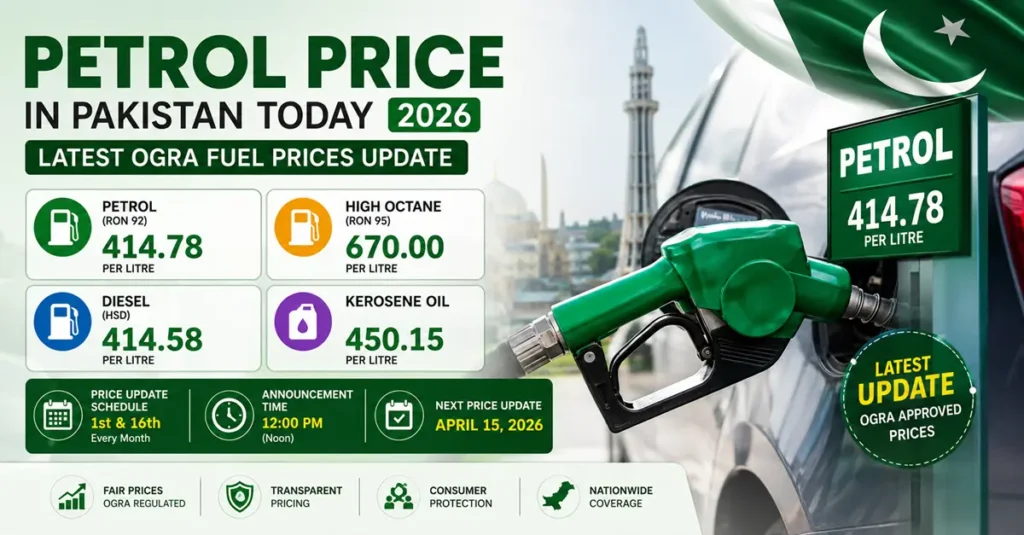
Latest Petrol Price in Pakistan Today
Below are the latest fuel prices announced by OGRA in Pakistan:
- Petrol (RON 92): PKR 414.78 per litre
- High Octane (RON 95): PKR 670.00 per litre
- Diesel (HSD): PKR 414.58 per litre
- Kerosene Oil: PKR 450.15 per litre
The latest fuel price revision increased petrol prices by approximately 14.92 Rupees. These rates are applicable across Pakistan, although slight differences may occur due to transportation and distribution costs.
City-Wise Petrol Prices in Pakistan
Petrol prices generally remain similar across Pakistan, but remote regions may experience small variations because of logistics and transportation expenses.
Major cities with updated petrol prices include:
- Karachi
- Lahore
- Islamabad
- Rawalpindi
- Multan
- Peshawar
- Quetta
- Faisalabad
- Hyderabad
- Sialkot
- Gujranwala
- Bahawalpur
- Sukkur
- Abbottabad
- Gwadar
The current estimated petrol rate in these cities is approximately PKR 414.78 per litre.
What is OGRA?
The Oil and Gas Regulatory Authority (OGRA) is Pakistan’s official regulatory body responsible for monitoring and regulating petroleum products and natural gas sectors. OGRA reviews fuel prices based on:
- International crude oil prices
- Dollar exchange rates
- Government taxes and petroleum levies
- Freight and transportation costs
- Import and refinery charges
After reviewing market conditions, OGRA sends recommendations to the Government of Pakistan for final approval.
OGRA Fuel Price Update Schedule
OGRA usually updates petroleum prices twice every month.
Fuel Price Schedule
- Update Frequency: Every 15 days
- Announcement Dates: 1st and 16th of each month
- Announcement Time: Usually around 12:00 PM
- Implementation: Same day or following day
This regular review system helps the government adjust local fuel prices according to international market fluctuations.
Factors Affecting Petrol Prices in Pakistan
Fuel prices in Pakistan depend on multiple national and international factors. Some of the major reasons behind price changes include:
1. International Crude Oil Prices
Pakistan imports a significant amount of petroleum products. Any increase in global oil prices directly affects local fuel prices.
2. Dollar Exchange Rate
Since oil imports are paid in US dollars, fluctuations in the Pakistani Rupee (PKR) against the USD have a major impact on fuel costs.
3. Government Taxes and Levies
Petroleum levy, customs duties, and sales tax contribute significantly to the final retail price of petrol and diesel.
4. Transportation and Freight Costs
Transporting fuel from ports and refineries to different cities adds distribution expenses, especially in remote areas.
5. Seasonal Fuel Demand
Higher fuel consumption during travel seasons or industrial demand can influence petroleum pricing trends.
Impact of Fuel Prices on Pakistan’s Economy
Petrol and diesel prices play a critical role in Pakistan’s economy. Even a small increase in fuel prices can affect millions of consumers and businesses.
Transportation Sector
Higher fuel prices increase transportation costs for buses, trucks, taxis, and delivery services.
Inflation and Consumer Prices
When transportation becomes expensive, prices of food, groceries, and daily-use products also increase.
Industrial Production
Factories and manufacturing industries face higher operating expenses because fuel is used in machinery, logistics, and electricity generation.
Electricity Generation
Many backup generators and industrial power systems rely on diesel fuel, increasing operational costs during high fuel price periods.
Foreign Exchange Pressure
Pakistan spends billions of dollars annually on petroleum imports, which impacts the country’s foreign exchange reserves.
How to Save Petrol Costs
With rising fuel prices, many people are looking for practical ways to reduce fuel expenses. Here are some useful fuel-saving tips:
Maintain Your Vehicle Regularly
Regular engine tuning and oil changes improve fuel efficiency.
Keep Proper Tire Pressure
Under-inflated tires increase fuel consumption and reduce mileage.
Avoid Aggressive Driving
Sudden acceleration and harsh braking waste petrol quickly.
Plan Your Routes
Combining multiple errands into one trip helps reduce fuel usage.
Remove Excess Weight
Heavier vehicles consume more fuel, so avoid carrying unnecessary weight.
Drive at Consistent Speeds
Using cruise control on highways can improve fuel efficiency.
Fuel Efficiency by Vehicle Type
Different vehicles consume fuel differently depending on engine size and driving conditions.
| Vehicle Type | Average Fuel Efficiency |
| Compact Cars | 12–15 km/l |
| Sedans | 10–12 km/l |
| SUVs | 8–10 km/l |
| Motorcycles | 30–40 km/l |
Motorcycles remain one of the most fuel-efficient transportation options in Pakistan.
Why Petrol Prices Differ Across Cities
Although OGRA announces nationwide prices, slight variations may occur because of:
- Transportation charges
- Regional supply chain expenses
- Distance from refineries and ports
- Distribution costs in remote regions
Cities closer to ports and fuel depots often experience lower transportation expenses compared to distant regions.
Future Fuel Price Expectations in Pakistan
Fuel prices in Pakistan may continue to fluctuate due to changing global oil prices, geopolitical tensions, exchange rate instability, and government tax policies. Consumers should regularly monitor OGRA announcements to stay informed about future price changes.
Experts believe that international crude oil demand, currency exchange movements, and import costs will remain key factors influencing petrol prices throughout 2026.
Final Words
Petrol prices in Pakistan have become a major concern for households, businesses, and transport sectors. The latest petrol rate stands at PKR 414.78 per litre, while diesel prices are PKR 414.58 per litre. Since OGRA revises fuel prices every 15 days, staying updated with official announcements is important for financial planning and budgeting.
Understanding how fuel prices work can help consumers make smarter decisions, improve fuel efficiency, and manage transportation costs more effectively.